
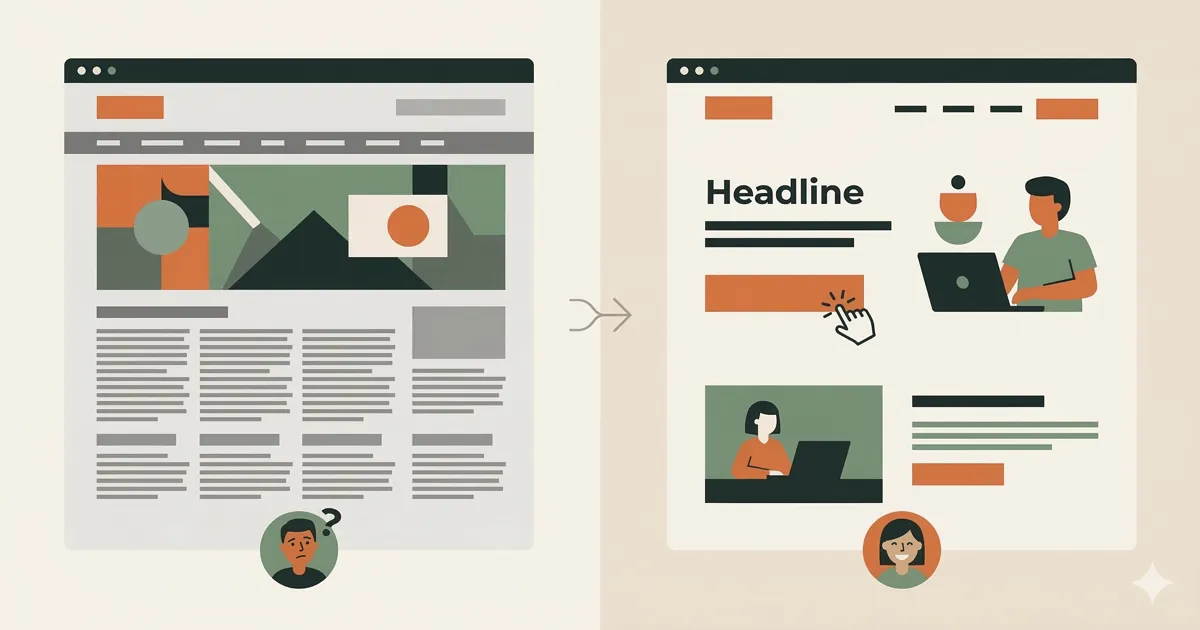
I see it all the time. A business owner shows me their website and asks why it's not working. The site looks fine. Good colors, nice logo, decent photos. But nobody's calling. The contact form hasn't had a submission in months.
The problem is almost never the design.
The Real Problem Isn't Your Design
Here's the pattern: a local business owner hires a designer (or builds it themselves on Wix/Squarespace), and the homepage opens with something like:
"Welcome to ABC Plumbing! We've been serving the community since 1987. Our team of dedicated professionals..."
That copy is about you. But the person reading it has a leaking pipe at 11 PM and needs to know one thing: can you fix my problem?
Enter the StoryBrand Framework
Donald Miller's StoryBrand framework flips the script. Instead of making your business the hero, it makes your customer the hero and positions your business as the guide who helps them win.
Every StoryBrand website follows a clear narrative:
- A character (your customer) has a problem
- A guide (your business) who understands their pain
- A plan that makes it simple
- A call to action that's impossible to miss
- Success: what life looks like after they hire you
- Failure: what happens if they don't act
When your website follows this structure, visitors instantly understand three things:
- What you offer
- How it makes their life better
- What to do next
What This Looks Like in Practice
Say you run an HVAC company in Anniston. Instead of a hero section that says "Trusted HVAC Solutions Since 2005", a StoryBrand site opens with:
Your AC went out. You need it fixed today.
We show up on time, fix it right the first time, and you don't pay until you're comfortable.
[Schedule a Repair] [Call Now]
The customer's problem is front and center. The path forward is obvious. There's no guessing.
Three Quick Wins You Can Apply Today
Even without a full redesign, you can start converting more visitors:
1. Rewrite Your Hero Section
Lead with the customer's problem, not your company history. Use language they'd actually say out loud. "Your AC went out" beats "Trusted HVAC Solutions Since 2005" every time, because it tells the reader you already understand why they're here.
2. Add a Clear Call to Action
One primary action per page. Call, book, or fill out a form. Make it visible without scrolling.
3. Cut the Jargon
"Comprehensive solutions" and "industry-leading" mean nothing. Nobody has ever picked up the phone because a website promised them a comprehensive solution. Say what you do in plain English, the way you'd explain it to your neighbor.
Pull up your website on your phone right now. Read the first sentence. If it starts with "we" instead of "you," you know where to start.
Not sure where your site is losing people? I'll take a look for free.